


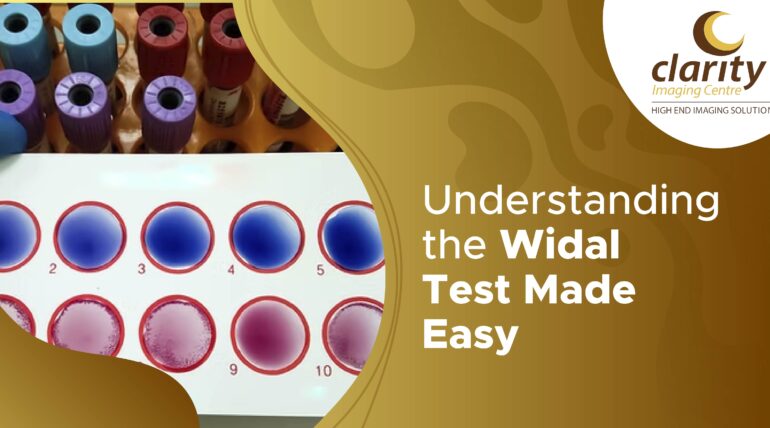
Typhoid infections are still widespread in many parts of India, particularly during the monsoon season or when water contamination is high. The Widal test is an old but reliable screening test that doctors still use to detect potential typhoid infections. This article will help you understand the working of the Widal test, reduce your confusion and make you feel better prepared.
What Is the Widal Test?
The Widal test is a blood test that detects antibodies produced by your body as it fights Salmonella bacteria, which causes typhoid. If you’re wondering what a widal test is, consider it your immune system’s fingerprint. This test looks for specific antibodies your body releases when you become infected.
Terms like “Widal blood test” and “Widal test” refer to this antibody detection technique. Even though newer testing methods exist, the Widal test is still commonly used in many clinics and smaller laboratories because it is simple, inexpensive, and valuable as a fundamental diagnostic tool.
Purpose & Importance of the Widal Test
The Widal test is used to help diagnose typhoid fever, particularly when a person has a persistent fever, stomach pain, headache, or lethargy. Doctors frequently use this screening test to get a clearer picture because many early typhoid symptoms overlap with those of viral fever, malaria, or food poisoning.
A frequently asked question is: which test is used for malaria and typhoid? The Widal test finds typhoid-causing germs, whereas malaria has its own antibody test. It is helpful in areas where typhoid cases rise annually or when diagnostic resources are limited. The test also helps diagnostic centres in directing medical professionals to either rule out typhoid completely or confirm the suspicion with advanced testing.
Normal Range of Widal Test
Understanding the usual range for the Widal test can help you interpret your report. A typical result shows low or insignificant antibody levels, frequently less than 1:20 or 1:40 for both O (somatic) and H (flagellar) antigens. Anything above the normal range indicates a stronger immunological response.
For example, you might hear someone enquire what the widal test 1 80 or widal test 1 160 implies. These numbers indicate the dilution at which antibodies remain detectable. Higher scores frequently indicate an increased risk of infection, though interpretation depends on your symptoms and medical history.
Normal levels also vary by location, and that indicates changes in exposure patterns between regions. That is why labs typically offer a reference range with their Widal test reports.
Widal Test Procedure
The widal test is basic and just takes a few minutes. A laboratory worker draws a little blood sample from your vein. The substance is either mixed on a slide (known as the widal slide test) or tested using the Widal test tube method, depending on the lab’s equipment and preferences.
- Slide Method: Quick, provides quick screening results.
- Tube method: Improved accuracy for confirming titers
- MP widal test: Sometimes coupled with a malaria test when symptoms overlap.
The test’s theory, known as the widal test principle, is based on the agglutination (clumping) reaction caused by antibodies in your blood interacting with antigens in the test kit. The more clumping found, the greater the risk of infection.
Cost & Accessibility
The cost of the widal test is one of the factors contributing to its success. It is less expensive than more complex testing, such as blood cultures or PCR. Prices can vary depending on your location, the procedure used, and whether the test contains numerous levels.
If you intend to be tested, choose a reputable diagnostic center such as a well-established laboratory in Coimbatore can help you acquire accurate reports and rapid findings with minimal fuss.
Understanding Widal Test Results
The Widal test interpretation part of your report is used by doctors to determine the possibility of infection. Here’s how the results are commonly understood:
- Negative: Antibody levels are too low to detect infection.
- Positive: High antibody levels may indicate an active or recent illness.
- Borderline: may require repeat testing after 48-72 hours.
A typical question among patients is: what does a Widal test positive mean? A positive test does not always confirm typhoid; it simply indicates that your immune system has responded to Salmonella bacteria. Doctors assess symptoms, sickness duration, and, in certain cases, repeat tests to confirm.
Similarly, understanding numbers like S typhi H 1:80 or S typhi O levels might aid in determining the stage of infection. Wide test findings must always be taken in context; previous immunizations, illnesses, or other remedies can all have an impact on the accuracy of results.
You may also hear individuals wonder which test is superior to Widal. Blood culture is the gold standard since it directly identifies bacteria but the Widal remains an effective preliminary technique, particularly in environments with limited resources.
Conclusion
The widal test is an effective screening tool for typhoid, particularly in early or ambiguous cases. Understanding how the test works, what the statistics imply, and when to take it allows you to make more educated decisions about your health.
Book your Widal test today and get accurate results for better treatment decisions.
FAQs
1. What is typhi O and typhi H?
There are two types of antibodies: O signifies an acute infection, while H indicates a previous or chronic illness.
2. What does S typhi H 1.80 mean?
Depending on the symptoms, it shows detectable antibody levels at 1:80 dilution, which could indicate infection.
3. Is typhoid O serious?
High O titers indicate an active infection and require medical care.
4. When is the best time to do a Widal test?
Reliable antibody levels are often achieved after 5-7 days of fever.
5. What is the cost of Widal test?
The cost varies by lab, but is usually affordable.
6. Which test is for malaria and typhoid?
Malaria is tested using a malaria antigen test or blood smear, and typhoid is tested using the Widal test or Typhi IgM test.
7. What are the disadvantages of the Widal test?
The Widal test can give false positive or false negative results, it is not very accurate, and it may confuse past infections with current ones.
Which test is better than Widal?
The Typhi IgM test or blood culture is considered better and more reliable than the Widal test.


