


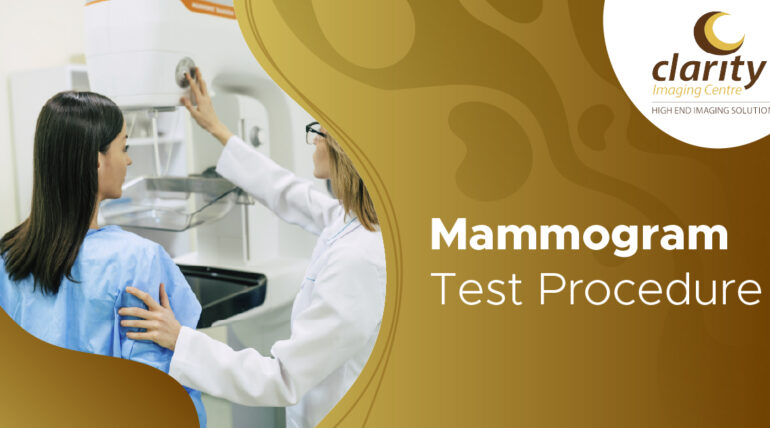
Mammograms are safe and effective breast cancer screening techniques that help save lives by detecting cancer early. This rapid imaging examination uses low-dose X-rays to examine breast tissue, allowing abnormalities to be identified before symptoms develop. Understanding the mammography method eliminates mystery and worry, allowing women to prioritise regular screening with confidence.
What is a Mammogram Procedure?
Mammograms are specialised mammography tests that use X-rays to capture detailed breast images. The principle of mammography is to compress breast tissue between plates to disperse it uniformly, thereby reducing thickness and improving image quality with minimal radiation exposure. Mammogram vs mammography refers to the image rather than the test; both words describe the same screening method required for breast cancer screening.
Why Mammograms are Done
Mammography indications include the following:
- Routine screening (annual/biennial for women over 40)
- New breast lumps, discomfort, or nipple discharge.
- Family history of breast cancer.
- Abnormal clinical exam results
- Follow-up following surgery or biopsies
Early identification greatly improves outcomes; localised tumours had a 90% 5-year survival rate, compared to 27% for distant spread.
Types of Mammograms
Different types of mammography meet various needs:
- Screening Mammogram: Routine screening for asymptomatic women (4 views, 2 per breast)
- Diagnostic Mammography: Targeted evaluation of abnormalities (additional views, magnification, ultrasound).
- 3D Tomosynthesis: Layered images reduce false positives by 40%.
- Digital Mammography: Computer-enhanced pictures for thick breasts.
Digital and 3D Tomosynthesis versions boost accuracy, particularly among young women.
Mammogram Procedure
The mammography procedure lasts 15-30 minutes in a radiology suite.
- Registration & Changing: Provide medical history and change into a gown (waist up).
- Positioning: The technologist puts one breast at a time on the flat detection plate.
- Compression: Upper paddle lowers, compressing the breast forcefully (10-15 seconds per image).
- Imaging: X-ray fires (inaudible click); hold breath briefly.
- Repositioning: side/top views for each breast (4 total photos)
- Completion: Dress; the radiologist evaluates promptly if diagnostic
Compression feels tight but only lasts seconds, which is necessary for clear photos.
Preparation
Mammography test preparation is easy:
- Schedule a week following menstruation (least sensitive).
- Skip deodorant, lotion, powder, and perfume (show as white spots).
- Wear two-piece apparel (pants/skirts are ideal).
- Bring previous mammograms for comparison.
- Inform about implants, surgeries, and breast alterations.
In India, mammography tests cost between ₹1500 and ₹4000. Insurance often covers screening.
There is no need to fast or undergo sedation. Consider getting a mammogram near Coimbatore at an approved centre.
Uses of Mammogram
Beyond screening, mammograms:
- Characterise lumps (solid vs cystic).
- Locate microcalcifications (early cancer signs).
- Guide biopsies.
- Keep track of how the treatment is doing.
- Assess implant integrity.
Benefits of Mammogram
Advantages of breast mammography:
- Detects 85-90% of tumours before they are visible.
- Reduces mortality by 20% to 40%.
- Non-invasive and rapid (15 minutes).
- Low radiation (an annual chest X-ray equivalent).
- Guides personalised therapy.
Regular screening reduces the risk of developing advanced cancer by half.
Risks & Side Effects
Mammography side effects are negligible.
- Temporary breast tenderness (hours).
- Rare false positives (10% of screening mammograms)
- Slight radiation (safe at the appropriate frequency).
- Compression-related discomfort is bearable.
Breast self-exam introduction complements screening monthly checks between mammograms. Detect changes early.
Also read: https://pmc.ncbi.nlm.nih.gov/articles/PMC7664734/
Mammogram Results & Interpretation
Mammogram results are classified using BI-RADS categories:
| Category | Meaning | Next Steps |
| 0 | Incomplete needs more views | Additional imaging |
| 1 | Normal | Annual screening |
| 2 | Benign finding | Annual screening |
| 3 | Probably benign | 6-month follow-up |
| 4 | Suspicious | Biopsy recommended |
| 5 | Highly suggestive of cancer | Urgent biopsy |
| 6 | Known cancer | Treatment planning |
Radiologists analyse current and previous studies for changes.
Aftercare
Post-mammography care:
- Mild pain is usual (24 hours).
- Take paracetamol as needed.
- Resume usual activities immediately.
- Avoid hard lifting momentarily.
Results conversation with the doctor (1-2 weeks)
When a Mammogram is Recommended
Breast Cancer Screening Guidelines:
- Average Risk: annual from 40; some start at 45.
- High risk (family history, BRCA, thick breasts): Begin 30 to 10 years before family diagnosis.
- Symptomatic: Any age with concerns.
Annual is best; don’t skip because of previous false alarms.
When to See a Doctor
Seeking fast review for:
- New breast lump.
- Persistent pain or tenderness
- Nipple discharge (clear or bloody)
- Skin alterations (dimples, orange peel)
- Breast self-examination abnormalities
- Early action offers the finest results.
Conclusion
The mammography method turns anxiety into knowledge by discovering breast cancer early, when it is most treatable. From simple preparation (no deodorant required) to speedy imaging (15 minutes), this tried-and-true tool gives women clarity and control. Normal results provide relief; anomalies require quick action. Prioritise screening your health investment will pay off for the rest of your life. Schedule with confidence; early detection saves lives.
FAQs
1. How is a mammogram done?
The breast is gently crushed between two plates, and X-ray images are obtained.
2. Do mammograms hurt?
They may cause slight discomfort or pressure for a few seconds.
3. How to detect breast cancer?
Self-exams, professional exams, mammograms, and other imaging tests can all help.
4. How to detect breast cancer early?
Regular mammograms and awareness of changes in the breast can help with early detection.
5. What is a bilateral mammogram?
An X-ray examination of both breasts.
6. What are the contraindications of mammography?
Pregnancy is a relative contraindication, unless medically indicated.
7. What not to do during a mammogram?
Do not use deodorant, perfume, or powder on your chest or underarms.
8. How much time is taken for a mammogram?
Usually about 15–20 minutes.
9. What is the best age to start mammograms?
Most women should begin at age 40, or earlier if at high risk.
10. What is the new procedure for mammograms?
3D mammography (tomosynthesis) produces sharper and more detailed images.
11. What happens after your first mammogram?
The photographs are examined and utilised as a reference point for future comparisons.
12. Is mammography safe during pregnancy?
It is normally avoided unless absolutely required and with adequate shielding.


