


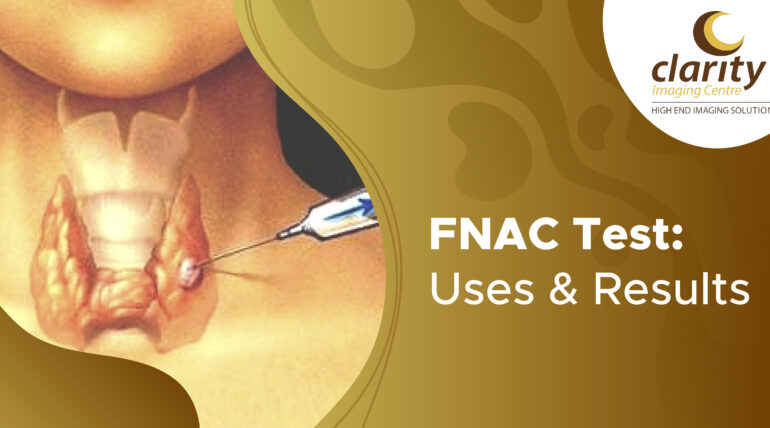
FNAC tests are broadly used, minimally invasive techniques that allow doctors to diagnose tumours, swellings, or suspected lesions without requiring significant surgery. They are often rapid and safe, and they provide important early information that directs follow-up or additional therapy.
FNAC Test
The full form of FNAC is the Fine Needle Aspiration Cytology test is a diagnostic method that uses a fine needle to obtain a small sample of cells from a mass or an organ for microscopic examination. It signifies that just cells (rather than complete tissue) are collected for analysis, making it less invasive than other procedures. This test helps doctors determine whether a swelling is malignant (cancerous), benign (non-cancerous), or inflammatory.
What is FNAC?
When patients enquire, “What is the FNAC test?” doctors clarify that it is a fine-needle aspiration procedure used to collect cells from suspected tumours in the breast, thyroid, lymph nodes, salivary glands, soft tissues, or other organs. The FNAC technique involves inserting a fine FNAC needle into the lesion, gently aspirating cells, spreading them on glass slides, and colouring them for a pathologist to examine.
Why is the FNAC Test Done
FNAC is typically recommended when:
- A new lump or swelling develops (for example, in the neck, breast, groin, or armpit).
- A visible lesion changes in size, form, or texture.
- Imaging (such as an ultrasound or CT scan) reveals a suspicious spot.
- Doctors have to confirm or rule out cancer.
- Follow-up is required for previously treated tumours and persistent swellings.
It helps to avoid unnecessary surgery in many circumstances and determines which patients require more invasive tests.
Types of FNAC Tests
Depending on the location and direction used, there are various types of FNAC.
- Palpation-guided FNAC is used for lumps that can be felt on palpation (such as superficial nodes and breast masses).
- Ultrasound-guided FNAC is used for mild or deep lesions in the thyroid, liver, or abdomen.
- CT-guided FNAC is used for deeper organs such as the lungs and retroperitoneal tumours.
Each type uses the same basic FNAC approach, but imaging assistance increases accuracy, particularly when the lesion is complex to feel.
FNAC Procedure
The FNAC procedure is typically performed on an outpatient basis:
- The area is disinfected with antiseptic.
- Local anaesthesia may or may not be utilised (the needle is extremely tiny).
- A thin FNAC needle is inserted through the bulge.
- The doctor carefully pulls the syringe plunger to aspirate the cells.
- The needle is withdrawn, and pressure is applied to avoid bruising.
- The material is placed on slides, fixed, and delivered to the laboratory.
The entire operation takes typically 10-20 minutes, and most patients can return home soon after.
Uses of FNAC
FNAC is commonly used for:
- Examine thyroid nodules, swollen lymph nodes, breast lumps, and salivary gland swellings.
- Distinguish between infections, inflammations, cysts, and tumours.
- Provide an early indicator of malignancy (cancer) vs. benign disease.
- Monitor any lumps that appear repeatedly or constantly.
FNAC is often employed as a first-line diagnostic technique for palpable lesions due to its speed and low cost.
Benefits of FNAC
Key benefits include:
- Minimally Invasive: No stitches or incisions are made; just a thin needle is utilised.
- Quick: The procedure is brief, and FNAC test results are typically available within 1-3 working days, depending on the laboratory.
- Cost-effective: FNAC tests are usually less expensive than surgical biopsies.
- Outpatient-Friendly: No hospital stay required in most circumstances.
- Good Accuracy: Particularly when paired with imaging guidance and skilled pathologists.
Choosing a reputable centre, such as the top laboratory in Coimbatore, can enhance accuracy and ensure proper sample processing and reporting.
Risks & Side Effects
FNAC is generally considered highly safe. Possible but rare risks include:
- Mild soreness or discomfort at the injection site.
- Minor bruises or swellings.
- Rarely, bleeding or infection.
- In exceedingly rare cases, insufficient samples necessitate repeat aspiration.
Serious problems are rare, primarily when qualified specialists perform the treatment in a sterile environment.
FNAC Test Results & Interpretation
After examining the material, the pathologist creates a report that may include:
- A benign or non-cancerous lesion (such as a cyst, reactive lymph node, or benign tumour).
- Suspicious or abnormal cells that may require further investigation or testing.
- Malignant cells.
- Non-diagnostic or inadequate sample size (FNAC or other test must be repeated).
Doctors use this information to determine whether to observe, treat medically, repeat FNAC, or perform a biopsy or surgery. The difference between FNAC and biopsy is that FNAC assesses cells (cytology) using a small needle, whereas biopsy removes a larger tissue sample for detailed architectural (histology) examination.
Also read: https://www.clarityimaging.in/iron-profile-test/
Preparation & Aftercare
Usually, very little preparation is required.
- Inform your doctor about any blood thinners or other medications.
- For deep organ FNAC, you may be required to fast for a few hours.
Aftercare is simple:
- Apply a small bandage for a few hours.
- Avoid doing heavy lifting or intense exercise in that area on the same day.
- If you experience slight discomfort, use paracetamol as prescribed by your doctor.
- Check for unusual redness, swelling, or acute discomfort and report it if it occurs.
Most people can resume their normal activities the same day or the next.
When FNAC is Recommended
Doctors may prescribe an FNAC test if:
- A new or unexplained lump remains for more than a few weeks.
- Imaging indicates a suspicious mass.
- There is a history of malignancy, and a new swelling has developed.
- Specific blood tests or symptoms suggest a particular disease.
It is frequently used as a “bridge” examination before moving on to more invasive treatments.
Treatment Decisions After FNAC
FNAC results help:
- Confirm if the lesions are benign and can be watched or treated medically.
- Determine when surgery, chemotherapy, or radiotherapy may be required.
- If cancer is suspected, determine the most appropriate biopsy or surgical procedure.
Remember that FNAC is only one piece of the jigsaw; doctors must combine it with clinical examinations, imaging, and other testing before recommending medication.
When to See a Doctor
Consult a doctor if you notice:
- Any new lump or swelling that persists for more than 2-3 weeks.
- A lump that is fast developing, hard, fixed, or accompanied by weight loss, fever, or night sweats.
- Pain, redness, or expansion of a previously identified mass.
Early consultation enables the timely application of instruments such as FNAC and, if necessary, quick thyroid therapy, lymph node examination, or other specific management methods.
Conclusion
An FNAC test is a safe, minimally invasive method of determining the type of tumours and lesions, preventing unneeded surgery and allowing clinicians to arrange the best treatment faster. With adequate direction, clear communication, and follow-up, it provides patients with reassurance and clarity when prompt answers are crucial. For accurate FNAC testing and expert reporting, consult the best laboratory in Coimbatore and get clarity you can trust.
FAQs
1. Is the FNAC test painful?
It usually causes just minor discomfort, equivalent to a fast injection.
2. Can the FNAC test detect cancer?
Yes, it can help detect cancer cells, but some patients still require a biopsy for confirmation.
3. Why is the FNAC test is done?
It is used to examine lumps or swellings and determine their cause.
4. Is FNAC a surgical procedure?
No, this is a minimally invasive needle test, not surgery.
5. Why would a doctor order FNAC?
To diagnose suspicious tumours, guide treatment options, and, occasionally, avoid unnecessary surgery.
6. Is FNAC safe during pregnancy?
In general, yes, because it does not involve radiation, but doctors evaluate each case individually.
7. What are the risks of the FNAC test?
Minor bleeding, bruising, pain, or infection are possible but rare.
8. Is anaesthesia given in FNAC?
To reduce discomfort, no or minimal local anaesthesia is often used.


