


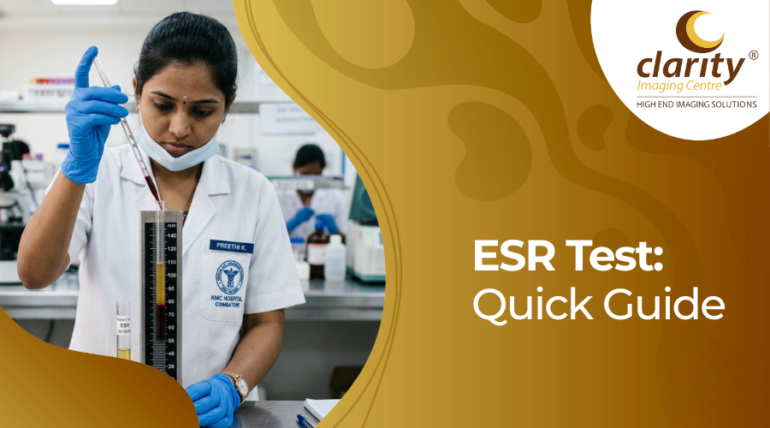
Early diagnosis and successful treatment of many illnesses depend on an understanding of inflammation in the body. The ESR blood test is a simple yet commonly used diagnostic technique that detects inflammation associated with infections, autoimmune diseases, and chronic illnesses. This test is often indicated when symptoms are ambiguous, but inflammation is suspected.
This tutorial will teach you what the test is, why it is administered, what the results imply, and how to interpret them appropriately.
What is an ESR Blood Test?
The ESR blood test measures how quickly red blood cells settle to the bottom of a test tube over a given period. The faster they settle, the greater the risk of systemic inflammation.
The full form of ESR is erythrocyte sedimentation rate, which describes how blood proteins affect the behaviour of red blood cells. This test is also known as the SED rate or blood sedimentation test.
Purpose of the ESR Blood Test
Doctors recommend this test when there are symptoms of inflammation, but no definitive diagnosis. It is helpful in:
- Detecting Inflammatory Conditions
- Monitoring autoimmune illnesses, such as arthritis
- Evaluating infections
- Tracking Treatment Progress
Although it cannot pinpoint the exact reason, it does provide a strong indicator that something abnormal is occurring in the body.
Also read: https://www.clarityimaging.in/rft-blood-test/
ESR Normal Range
The ESR normal range varies according to age and gender. Generally, the values include:
- Men: 0-15 millimetres per hour
- Women: 0-20 millimetres per hour
- Children: 0-10 millimetres per hour
Because of physiological variations, the normal ESR range in women is slightly higher than in men. Similarly, males typically have a lower ESR normal range.
Doctors must evaluate results based on symptoms and other tests, as minor differences may not always indicate disease.
Causes of High ESR Levels
When high ESR levels are detected, it usually suggests inflammation. However, it does not indicate a particular disease.
Common explanations include:
- Infections (bacterial, viral)
- Autoimmune disorders, such as rheumatoid arthritis
- Chronic illnesses
- Certain cancers
- Pregnancy or Anaemia
An elevated erythrocyte sedimentation rate may indicate illness or inflammation. Usually, more testing is needed to identify the precise cause.
Causes of Low ESR Levels
Low ESR levels, while uncommon, can provide useful information. The ESR low indicates:
- High red blood cell count
- Some blood diseases
- Severe liver issues
Low results are less alarming than high readings, but they still require clinical correlation.
ESR Test Procedure
The ESR blood test process is straightforward and quick:
- A vein in the arm is used to draw blood
- A vertical tube is filled with the sample
- The pace at which red blood cells settle is assessed
The exam is painless, involves little preparation, and is typically completed in minutes.
Interpreting ESR Test Results
Understanding your ESR test report is vital, but it should always be done under medical supervision.
- ESR 20 represents a slight elevation and may not always signal a significant condition
- ESR 30 indicates moderate inflammation and requires additional examination
- ESR 50 indicates severe inflammation
- ESR 90 indicates serious inflammation and requires medical treatment
These readings are markers, not diagnoses. Doctors frequently combine ESR data with other tests, such as CRP, to get a fuller picture.
ESR Test Price and Availability
ESR test prices in India range from ₹100 to ₹300, depending on the diagnostic centre. It is commonly found in most pathology labs.
If you’re seeking affordable and accurate diagnostics, the best laboratory in Coimbatore guarantees accurate results, good hygiene, and experienced interpretation.
Disclaimer
The information in this article is meant solely for educational awareness and general information. It is not intended to replace professional medical advice, diagnosis, or treatment. Always consult a qualified healthcare professional or doctor regarding any medical condition or health concern.
Conclusion
The ESR blood test is a simple yet effective method for detecting inflammation in the body. While it does not provide a final diagnosis, it is critical in directing further studies and monitoring continuing symptoms. If you have persistent symptoms such as exhaustion, fever, or inexplicable pain, see your doctor and consider being tested.
Early detection improves treatment outcomes, so don’t ignore your body’s warning symptoms.
FAQs
1. What is the full form of ESR in a blood test?
It stands for erythrocyte sedimentation rate, which indicates how quickly red blood cells settle.
2. What is the normal ESR range for women?
It typically varies from 0 to 20 mm/hr, but this can change slightly with age.
3. What does high ESR mean in a blood test?
A high ESR suggests the body is inflamed due to infection, illness, or another condition.
4. What causes a raised ESR level?
Infections, autoimmune diseases, anaemia, and chronic illnesses are some of the most common causes.
5. Is fasting required for an ESR blood test?
No, fasting is not necessary for this test.
6. What is the difference between ESR and CRP tests?
ESR assesses inflammation indirectly, whereas CRP detects it more directly and quickly.
7. How much does the ESR blood test cost in India?
The cost ranges between ₹100 and ₹300, depending on the lab.
8. What does low ESR mean?
Low ESR levels may indicate blood diseases or elevated red blood cell numbers.
9. What is the Westergren method for ESR?
It is the most often used technique for correctly measuring ESR in laboratories.
10. What does ESR 30 or ESR 20 mean?
These results indicate mild to moderate inflammation and necessitate clinical assessment.
11. How to reduce ESR in a blood test?
Treatment focuses on addressing the underlying cause, such as an infection or inflammation, using medicines and lifestyle changes.


