


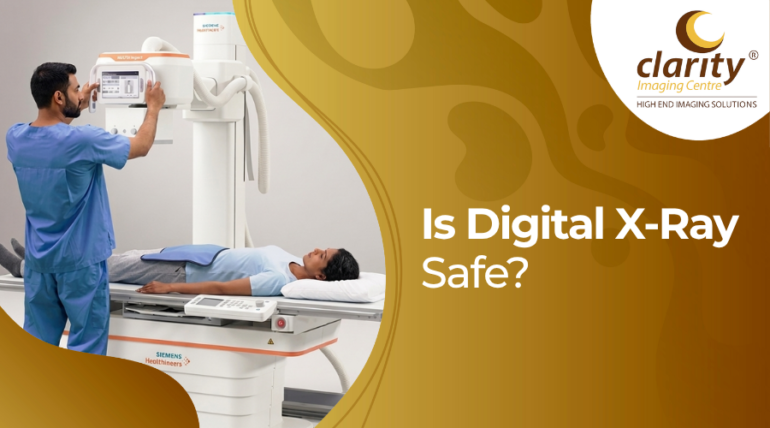
If you’ve ever been to a diagnostic centre, your doctor may have recommended a digital X-ray. This modern imaging technology has revolutionised the detection and monitoring of medical disorders. Unlike older systems, it produces faster results, sharper images, and increases patient comfort. Understanding how it works will help you feel more confident and ready for your test.
What is a Digital X-Ray?
A digital X-ray is a type of advanced imaging that captures photos of the inside of your body using digital sensors rather than standard photographic film. These photos are immediately available on a computer, which makes diagnosis faster and more efficient.
To put it simply, digital X-ray is a new technique for converting X-ray impulses into digital images. This enables doctors to magnify, enhance, and analyse information more accurately.
How Does Digital X-Ray Work?
The process is straightforward and quick. When you undergo this scan:
- A limited amount of radiation travels through the body
- Various tissues absorb radiation differently
- A digital detector collects the image
- The image appeared quickly on a screen
This entire process is part of a digital radiography system that eliminates the need for film processing and drastically reduces waiting time.
Types of Digital X-Rays
There are many types of scans, depending on the area being investigated. The most frequent are:
- Chest imaging for the lungs and heart
- Bone imaging for fracture
- Dental Imaging for Oral Health
- Abdominal scans for internal organs
A digital chest X-ray is one of the most commonly used scans, particularly for respiratory disorders.
Also read: https://www.clarityimaging.in/opg-x-ray-test/
Uses of Digital X-Ray in Diagnosis
Doctors use this imaging approach to diagnose a wide variety of illnesses. You could be advised to take one for:
- Detecting fractures and bone injuries
- Identifying infections in the lungs
- Monitor joint conditions
- Checking for organ problems
A chest X-ray is often used to diagnose breathing problems, infections, and chronic lung diseases.
Digital X-Ray vs Traditional X-Ray
Understanding the digital X-ray vs traditional X-ray comparison reveals why digital approaches are preferred today.
| Feature | Digital X-Ray | Traditional X-Ray |
| Image Quality | High resolution | Moderate |
| Processing Time | Instant | Time-consuming |
| Storage | Digital Storage | Physical films |
| Radiation Exposure | Lower | Slightly higher |
This transition to modern X-ray imaging enhances patient safety and diagnostic accuracy.
Is Digital X-Ray Safe?
Yes, this imaging technique is considered safe for most people. It employs well-managed radiation levels. Healthcare practitioners ensure exposure is kept to a minimum while still achieving high-quality photographs.
If you are pregnant or have any specific health concerns, you should consult your doctor before the scan.
Radiation & Safety Measures
Even when radiation is present, careful safety precautions are followed.
- Protective shields may be employed
- Exposure time is minimised
- Only the specified region is scanned
- The equipment is regularly serviced
These safeguards ensure that the benefits of digital X-rays outweigh the few risks associated with them.
Advantages of Digital X-Ray
This contemporary imaging technology offers several advantages, making it the favoured option.
- Faster results with no wait time
- Clear and detailed photos
- Easy sharing with specialists
- Reduced radiation exposure
- Environmentally friendly (no film or chemicals)
The advantages of digital X-rays make them suitable for routine and emergency diagnostics.
What to Expect During a Digital X-Ray Procedure
If you’re getting ready for a scan, here’s what you can expect from the digital X-ray procedure:
- You may be requested to remove metallic objects
- You will be positioned depending on the area being scanned
- The technician will guide you to remain still
- The scan takes just a few seconds
The procedure is painless and requires no recuperation time. If you visit an X-ray scan centre in Coimbatore, you can expect a quick and easy encounter with advanced technology.
Understanding Digital X-Ray Results
After the scan, the images are evaluated by a radiologist. Your digital X-ray report is then created and delivered to your doctor.
The report may include:
- Observations on the scanned area
- Any discovered abnormalities
- Recommendations for additional tests if necessary
The images can be improved for greater clarity and precise interpretation because they are digital.
Common Conditions Diagnosed Using Digital X-Ray
This imaging approach is commonly used to diagnose a variety of medical disorders, including:
- Bone fractures and dislocations
- Lung infections such as pneumonia
- Arthritis and joint difficulties
- Dental problems
- Specific tumours or abnormalities
It is essential for early diagnosis and treatment planning.
Key Points to Remember
- It’s a quick and efficient imaging procedure
- Radiation exposure is minimised and managed
- The results are accessible quickly
- It’s commonly utilised for many diagnostic applications
- Preparation is simple and stress-free
Disclaimer
The information in this article is meant solely for educational awareness and general information. It is not intended to replace professional medical advice, diagnosis, or treatment. Always consult a qualified healthcare professional or doctor regarding any medical condition or health concern.
Conclusion
Understanding how a digital X-ray works gives you more confidence when going through diagnostic tests. This technology has improved healthcare efficiency and patient satisfaction by allowing for faster imaging and more precise outcomes. Whether you require a regular check or a full scan, digital imaging provides clarity, safety, and speed, making it a fundamental part of modern medical treatment. Need a fast and accurate diagnosis?
Book your digital X-ray today and get clear results with minimal wait time.
FAQs
1. What are the disadvantages of digital X-rays?
They can be costly to install, necessitate qualified technicians, and rely on electronic systems that may have technical difficulties.
2. How long do digital X-rays take?
The scan normally lasts a few seconds, and the results are accessible practically immediately.
3. Which is better, DR or CR digital x-ray?
DR is considered superior because it outperforms CR in terms of speed, image quality, and radiation dose.
4. How many X-rays are safe in a month?
There is no set quantity, but doctors limit exposure and only prescribe X-rays when absolutely required to keep radiation safe.
5. How much does an X-ray cost?
Prices in India typically range from ₹200 to ₹ 2,000, depending on the area and type.
6. Is digital motion X-ray safe?
Yes, it is generally safe when done under physician supervision, albeit it may result in slightly greater exposure than with a standard X-ray.
7. What are the three types of X-rays?
The most common varieties are diagnostic X-rays, dental X-rays, and fluoroscopy (real-time imaging).


