

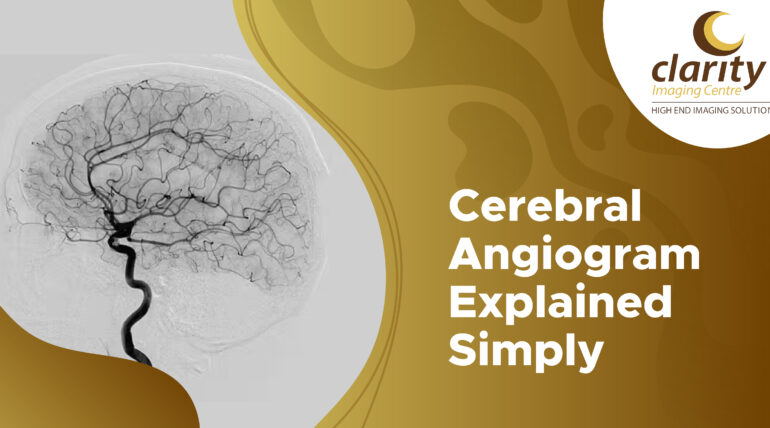
A cerebral angiogram is a comprehensive imaging procedure that enables clinicians to visualise the blood vessels of the brain and neck. It is essential for the accurate detection of major neurological diseases. It’s reasonable to be nervous if you’ve been told you have to take this test. Understanding the process, purpose, and safety factors will help you feel more confident and prepared for the treatment.
What is a Cerebral Angiogram?
Cerebral angiography is a diagnostic imaging procedure that visualises the arteries that supply the brain with blood. Simply put, it is a specialised form of angiography used to assess cerebral circulation.
Angiography is an imaging procedure that maps blood vessels using contrast dye and X-ray equipment. It is also referred to as an arteriogram in medical terminology.
Doctors may offer this procedure when other imaging tests do not provide sufficient information regarding blood flow issues.
Why is the Test Done?
Doctors order this test for:
- Detect blocked arteries
- Identify the narrowed blood vessels
- Examine abnormal vessel connections
- Investigate unexplained neurological problems
A CT angiography of the brain may be considered in some circumstances, but catheter-based imaging provides more detailed vascular information.
Conditions Diagnosed
The following table highlights the conditions typically diagnosed using this test:
| Condition | Purpose of Diagnosis |
| Brain aneurysm | Detects bulging or weakened vessels |
| Arteriovenous malformation | Identifies abnormal artery-vein connections |
| Blood clots | Locates blocked blood flow |
| Vascular inflammation | Evaluates vessel wall swelling |
| Tumours affecting the blood supply | Assesses abnormal circulation |
| Carotid artery narrowing | Examined via neck angiogram |
A brain angioplasty may be planned if significant narrowing is detected.
Procedure Overview
Cerebral angiography is performed in a hospital radiology suite under sterile conditions.
- The treatment involves inserting a tiny catheter into an artery, commonly in the groin or wrist.
- The catheter is carefully directed to the brain vessels.
- Contrast dye is injected.
- X-ray images show real-time blood flow.
This varies from a CT cerebral angiography, which employs CT scanning rather than catheter insertion.
Angiograms typically last 30 to 60 minutes.
Preparation Before Test
Proper preparation assures both safety and accuracy.
- Before taking the test:
- Your doctor reviews your medical history and allergies.
- Kidney function is examined.
- Blood thinners can be modified.
- Fasting may be necessary for several hours.
Patients often enquire about how angiography is performed, and understanding the preparation processes may help reduce uncertainty.
What Happens During the Procedure
During the cerebral angiography process, you will remain still on the examination table.
You might experience:
- A brief warm sensation when dye is used.
- Mild pressure on the catheter site.
- Minimal discomfort.
Many patients worry about how long angiography takes. While imaging can take less than an hour, the overall hospital stay, including preparation and recuperation, may be longer.
Recovery & Aftercare
After the imaging is completed:
- Pressure is given to the catheter site.
- You will be resting for several hours.
- Hydration is encouraged.
- Heavy exercise should be avoided for 24 to 48 hours.
Following an angiography, it is important to watch for swelling, bruising, or discomfort at the insertion site.
Mild bruising is frequent and typically disappears rapidly.
Benefits of Cerebral Angiogram
The main advantages of the test are:
- High-resolution, real-time imaging
- Accurate identification of vascular anomalies
- Immediate advice for treatment decisions
- Superior detail compared to CT angio brain.
This imaging approach delivers unparalleled clarity for complex neurological diseases.
Risks & Safety Considerations
Angiogram adverse effects, like those of any other medical operation, are conceivable but infrequent.
Possible risks include:
- Mild allergic reaction to contrast dye.
- Bleeding from the insertion location
- Temporary headache.
- Very low risk of stroke.
When conducted by a skilled professional, the treatment is generally regarded as safe.
Check out our charges for various angiogram procedures.
Result Interpretation
A neurologist and radiologist thoroughly examine the imaging results.
Normal results show:
- Smooth, unobstructed arteries.
- Good blood circulation
Abnormal findings could indicate:
- Vessel narrowing and leakage
- Blockage
- Abnormal connections
The findings inform treatment decisions and follow-up care.
When Is the Test Recommended?
Physicians order this test when symptoms suggest vascular issues or when other imaging is inconclusive.
| Situation | Reason |
| Stroke symptoms | Identify blocked or bleeding vessels |
| Severe unexplained headaches | Rule out an aneurysm |
| Abnormal MRI or CT results | Confirm vascular diagnosis |
| Before brain surgery | Map the blood supply accurately |
| Suspected carotid artery disease | Examine circulation |
If you’re weighing your alternatives, some people look into sophisticated imaging at an MRI scan centre in Coimbatore before undergoing invasive procedures.
Conclusion
Cerebral angiogram is a highly diagnostic procedure that enables clinicians to assess the health of the brain’s blood vessels reliably. Although the concept of the test may appear daunting, it is carefully executed with patient safety as the primary focus. Understanding the aim, preparation, procedure, and recuperation processes can significantly lessen fear. When implemented, this test can save lives by enabling early detection and treatment of major neurological diseases, allowing patients to proceed with clarity and confidence.
FAQs
1. Is an angiogram painful?
It is usually painless. You may experience modest pressure during catheter insertion and mild discomfort afterwards.
2. How serious is an angiogram?
It is a minimally invasive diagnostic procedure that is typically considered low-risk when performed by a specialist.
3. Is an angiogram safe?
Yes, it is generally safe; however, as with any procedure, there are minor risks, including bleeding or allergic reactions.
4. Are you awake during a cerebral angiogram?
Yes, most patients are awake but medicated to ensure their relaxation and comfort.
5. How long is the recovery after a cerebral angiogram?
Recovery often requires a few hours of observation, with most people resuming normal activities within 24 to 48 hours.
6. What happens if a blockage is found during an angiogram?
Depending on the severity, physicians may prescribe medication, perform angioplasty or stenting, or employ other treatments.
7. How soon will I get angiogram results?
Preliminary results are often provided the same day, although thorough reports may take some time.
8. What are three risks of having an angiogram?
Bleeding at the catheter site, an allergic reaction to contrast dye, and a small risk of stroke or infection.
9. What is the cost for cerebral Angiogram?
The test price will vary based the scan centre, but usually around Rs 4500 to 7500/-


